Choosing homemade food for special occasions
What should you prepare, and for how many guests? A practical guide to quantities, menu balance and ordering time for gatherings, mevlit and engagements.

When preparing for a large gathering, the hardest part is not the cooking but deciding how much to prepare. Too little and you feel embarrassed; too much and food is wasted. The approach below is a framework that works well for home gatherings.
First, define the role of the food
Kibbeh (kibbeh) and stuffed vine leaves (sarma) reach the table in two different ways:
- As a main course: served with rice, salad and yoghurt. The count per person goes up.
- As refreshments: for tea time, a mevlit or welcoming guests. There is no other heavy dish, but the plates keep going round.
Calculating quantities without making this distinction is where most miscalculations begin.
A rough per-person guide
A starting point based on experience:
- Kibbeh as a main course: 3–4 pieces per person
- Kibbeh as refreshments: 2–3 pieces per person
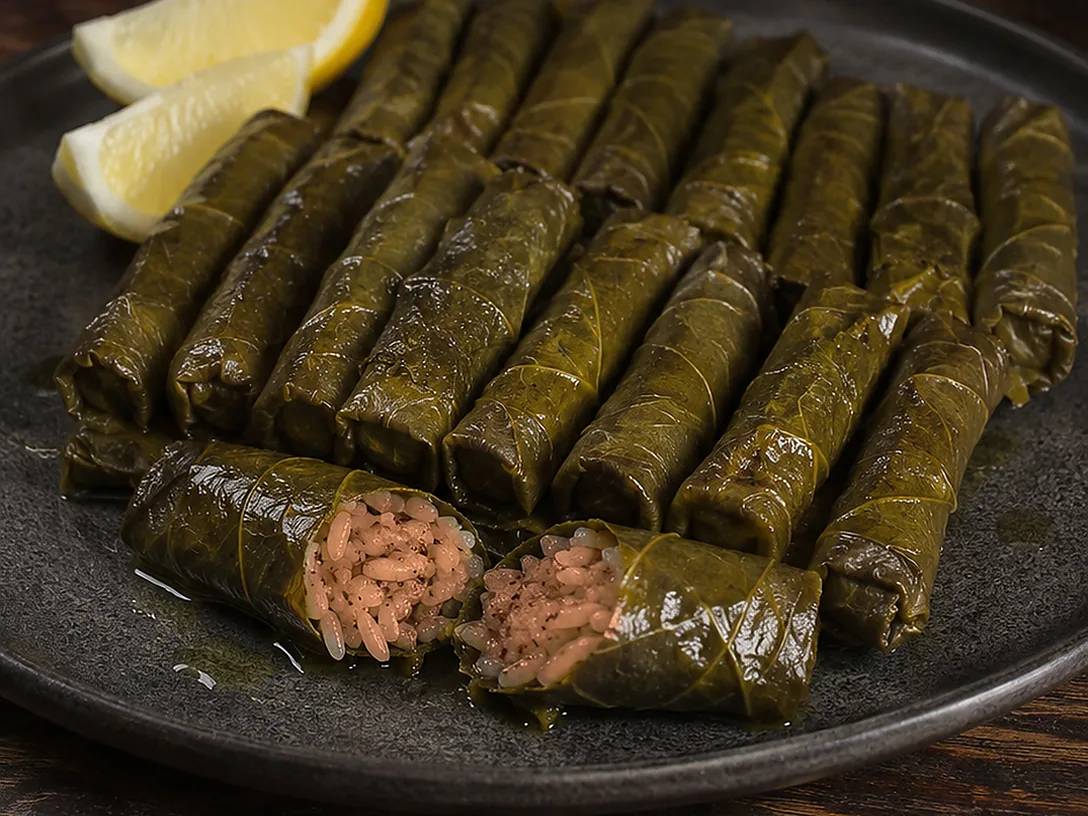
- Stuffed vine leaves as meze: 4–5 pieces per person
These are starting numbers, not strict rules. The type of event, the time of day and your guests change the result. A dinner invitation and afternoon tea do not call for the same amounts.
Balancing the menu
Kibbeh is fried, so it is filling and rich; vine leaves are light and slightly tangy. Putting both on the same table is no coincidence — they balance each other. These additions complete the spread:
- Garlic yoghurt or cacık (almost a must with kibbeh)
- Plenty of lemon
- Seasonal greens, parsley and pickles
- Plain rice or bulgur pilaf if the meal is a main course
Timing: the most critical part
The most common problem with group orders is late notice. Hand-shaped kibbeh and individually rolled vine leaves take longer in direct proportion to the quantity. Between an order of 20 pieces and one of 200 there is not only a difference in ingredients, but also in labour and planning.
A practical approach: get in touch on the day you confirm the date. You can update the quantity later, but sharing the date early secures your place.
Plan collection around serving time
If you want your kibbeh fried, collect it close to serving time. If you want flexibility, ordering uncooked and frying at home is easiest. Collecting the vine leaves the day before is an advantage — rested sarma tastes better and your kitchen is free on the day of the event.
A final note
At large gatherings, the instinct to have “a little extra” is usually right, but not without limits. Leftover uncooked kibbeh can be frozen; fried kibbeh and vine leaves should be eaten within a few days. Keep this in mind when planning for extras.
Would you like to order?
Send the product, quantity and date so we can confirm availability and the current price. The website takes no payment and requires no account.